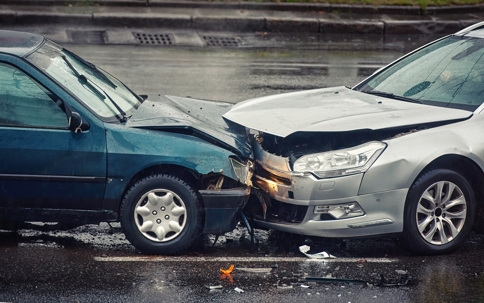
Pennsylvania drivers often assume their auto insurance will “take care of it” after a major car crash. But plenty of policies fall short. State minimum coverage can be exhausted by a single ER visit and a brief hospital stay, and many drivers on the road carry only those minimums. Uninsured and underinsured motorist coverage may be missing, too low, or unstacked. A serious accident exposes those gaps fast, leaving families facing expenses that exceed available coverage.
Pennsylvania’s Minimum Coverage Is Insufficient
Pennsylvania requires drivers to carry liability limits of $15,000 per person / $30,000 per accident / $5,000 property damage, plus at least $5,000 in first-party medical benefits (PIP). The Pennsylvania Insurance Department lays out those minimums plainly, and they are exactly what many drivers buy.
These minimums exist to meet a legal requirement but often do not match the cost of a serious injury.
After a motor vehicle crash, costs can accumulate quickly between ambulance transport, a night in the hospital, follow-up care, physical therapy, prescriptions, and time off work. Even without surgery, medical care for moderate injuries can run well beyond $15,000.
Now add the structure of liability coverage: $15,000 per person is the ceiling for one injured person when the at-fault driver carries minimum limits. If, for instance, the injuries and treatment climb to $80,000, that leaves a $65,000 shortfall. In a multi-car crash, the $30,000 per accident cap becomes a second trap. More injured people means less coverage to go around.
Your First Layer of Coverage Can Run Out Fast
Pennsylvania’s “no-fault” system means your own policy’s medical benefits, often referred to as Personal Injury Protection (PIP) or first-party benefits, generally pay first, regardless of who caused the crash. The minimum is $5,000.
That sounds like a cushion until you see how fast $5,000 disappears. A single day of care can consume the entire PIP minimum, especially when diagnostics or specialist consults are involved. After that, many people find themselves leaning on health insurance, out-of-pocket payments, or hoping the at-fault driver’s liability coverage is high enough. Often, it isn’t.
Underinsured Drivers Are Common, & Uninsured Drivers Still Exist
Nationally, the uninsured rate has climbed. The Insurance Research Council reports 15.4% of motorists nationwide were uninsured in 2023, which works out to more than one in seven drivers. Even when a driver does carry coverage, low limits create the same dilemma: not enough money available when a crash causes catastrophic harm.
That’s where UM/UIM coverage becomes crucial. UM (Uninsured Motorist) helps when the at-fault driver has no insurance. UIM (Underinsured Motorist) helps when the at-fault driver has insurance but not enough.
Plenty of people assume their policy includes these automatically. Some policies don’t. Others carry minimal UM/UIM limits that mirror the same outdated minimums.
What surprises many Pennsylvania drivers is how affordable meaningful UM/UIM coverage actually is. In most cases, the premium for UM/UIM protection is only a fraction of what people expect, often costing far less than other optional coverages with far less real-world impact. When compared to the financial risk of a serious injury caused by an uninsured or underinsured driver, UM/UIM coverage is widely considered the single best value-for-dollar protection available in an auto policy.
Stacking Can Double or Triple Protection, But Many Waive It Without Realizing It
UM/UIM coverage matters, but the structure matters just as much. Stacking allows you to combine UM/UIM limits across multiple vehicles on the same policy. In Pennsylvania, stacking is generally included by default unless you sign a written waiver. Many do in order to pay less in premiums.
In practical terms, stacking can dramatically increase the amount of coverage available after a serious crash. For example, if you insure two vehicles and carry $100,000 in UIM coverage on each, stacking gives you $200,000 in total protection. If you waive stacking, you typically stay capped at $100,000.
Limited Tort Can Shut the Door on Pain-and-Suffering Compensation
Pennsylvania drivers choose between full tort and limited tort. Limited tort usually lowers premiums. That discount can feel appealing, especially when insurance costs keep climbing.
However, limited tort comes with a key tradeoff: pain-and-suffering damages are generally unavailable unless injuries meet the legal definition of a “serious injury.” Pennsylvania law uses that threshold to determine whether someone can recover non-economic damages in a limited tort case.
Court decisions have made the serious injury threshold difficult in some situations, even when the injury feels serious to the person living with it. A fracture that heals on an x-ray can still disrupt a life for months, yet limited tort can invite an insurer to argue the injury does not qualify.
Insurance Companies Can Delay, Deny, or Underpay
Insurance is a business. After a serious crash, coverage may exist on paper, yet the claims process can still involve delay, disputes, or offers that fall short while bills keep coming.
Pennsylvania law gives policyholders a way to push back when an insurance company mishandles a claim. Under the state’s bad faith statute, 42 Pa.C.S. § 8371, an insurer can face serious financial consequences for unreasonable delays or denials.
Our firm has used that statute to obtain justice for policyholders, including in the Bergs’ case, which became a landmark bad faith victory statewide. A collision claim that should have been handled fairly escalated because of the insurer’s conduct, and the court ultimately held the company accountable.
A Quick Policy Check Can Prevent a Long, Expensive Struggle
A declarations page review takes minutes. That review can reveal whether protection is real or paper-thin. Look for:
- UM/UIM coverage: present or missing
- UM/UIM limits: realistic or minimal
- Stacking: stacked or waived
- Tort option: full tort or limited tort
- Medical benefits: $5,000 minimum or higher
Ask direct questions, too. Insurance agents answer these every day, and a quick conversation now can help you confirm you have the protection you intended long before you ever need to rely on it.
- “Do I have stacked UM/UIM coverage?”
- “Did I sign a stacking waiver?”
- “What tort option did I choose?”
- “What medical benefits limit do I carry?”
How Mayerson Injury Law, P.C. Helps When Coverage Falls Short
A devastating injury changes life overnight. Insurance paperwork should not be another source of chaos, yet policy terms and exclusions often become another burden when your only focus should be healing.
Mayerson Injury Law, P.C. helps clients identify every available source of recovery after a serious accident in Pennsylvania, including:
- Claims against the at-fault driver and other responsible parties
- UM/UIM claims under your own policy
- Disputes involving stacking, waivers, and exclusions
- Limited tort issues and serious injury threshold arguments
- Bad faith investigations when an insurer unreasonably delays or denies benefits
If you were seriously injured and your insurance company is telling you the policy “doesn’t apply” or “doesn’t cover much,” we can review the situation and explain your real options. We have represented injured people in this community since 1963, and we know how to press for fair treatment when the system stops working the way it should.
Schedule a consultation with experienced personal injury lawyers by calling (610) 492-7155 or sending us a message online. Your first consultation is free.